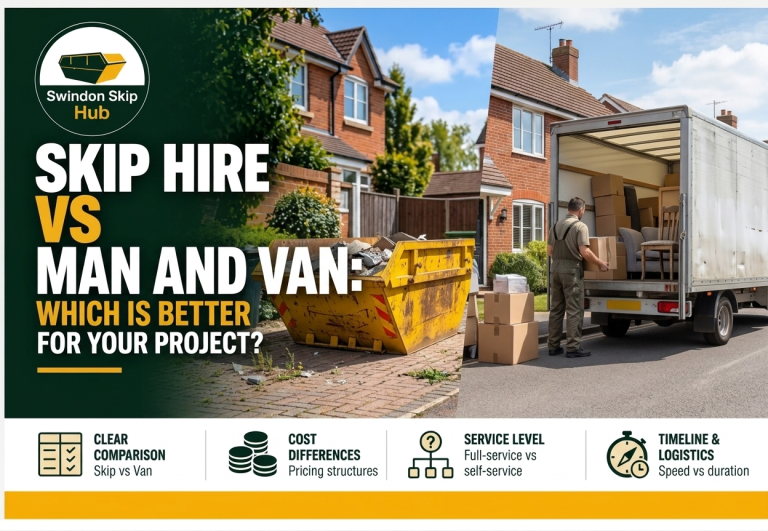
If you’ve got a large amount of waste to deal with, you’ve probably come across both skip hire and grab hire as options. Both can take waste away, but the way they work is quite different.
The right option depends on the type of waste you have, how much there is, where it is located and how quickly you need it removed. A skip gives you somewhere to put waste over a period of time, while grab hire removes a prepared pile in one visit.
Quick Answer
Skip hire means a skip is delivered to your property and left there while you fill it during the agreed hire period. It is useful for household clearances, gardens, DIY and renovation work where waste is produced gradually.
Grab hire uses a lorry with a hydraulic arm to pick up waste that has already been piled up. The lorry loads the waste and takes it away during the same visit, making it useful for large amounts of soil, rubble and other heavy materials.
For most household projects, skip hire gives you more flexibility because you can add waste as you work. Grab hire can be useful when you already have a large pile of heavy waste ready to be removed.
What Is Skip Hire?
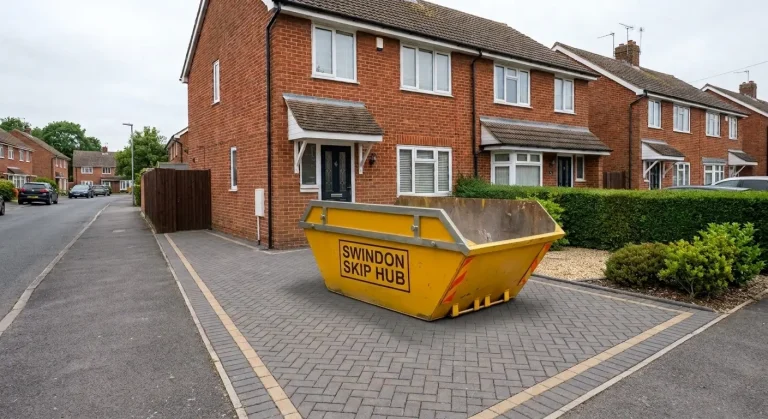
Skip hire is a large open topped container delivered to your property. Depending on the size you choose, you can use it for anything from a small clear out to a much larger renovation or building project.
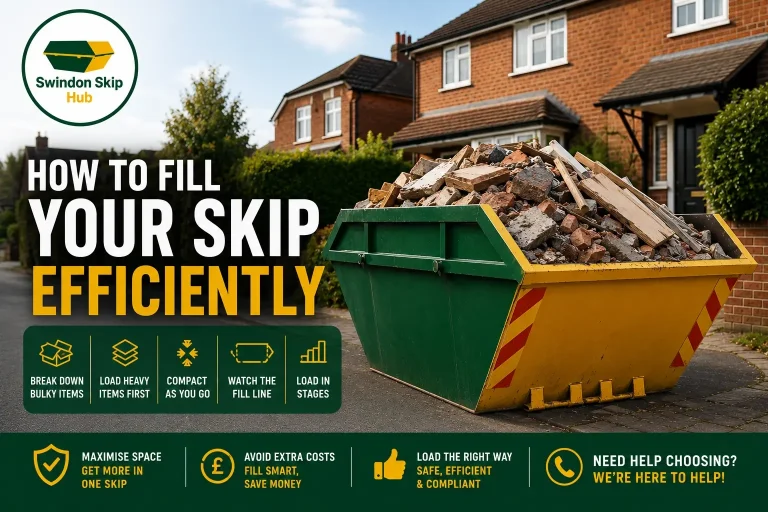
You can fill the skip as you work rather than having to remove everything at once. This makes it useful for projects that take several days or longer.
For example, if you are clearing a house, doing a garden tidy up or renovating a room, you can put the waste into the skip as it is produced. Once you have finished, the skip is collected and the waste is taken away.
At Swindon Skip Hub, we provide a range of skip sizes for different types and amounts of waste in Swindon.
What Is Grab Hire?
Grab hire works differently. A grab lorry has a hydraulic arm with a bucket attached to it. Instead of leaving a container at your property, the operator uses the arm to pick up waste and load it directly into the lorry.
The waste needs to be ready before the lorry arrives. Once everything has been loaded, the lorry leaves with the waste. This avoids the kind of repeated manual lifting that HSE’s manual handling guidance flags as a common cause of workplace injury.
This can be useful when you have a large pile of soil, rubble, hardcore or other heavy material that needs removing quickly.
The main thing to remember is that skips are not designed for every type of waste. If you’re unsure what can and cannot go in a skip, it’s better to ask before putting it inside.
Is Skip Hire Cheaper Than Grab Hire?
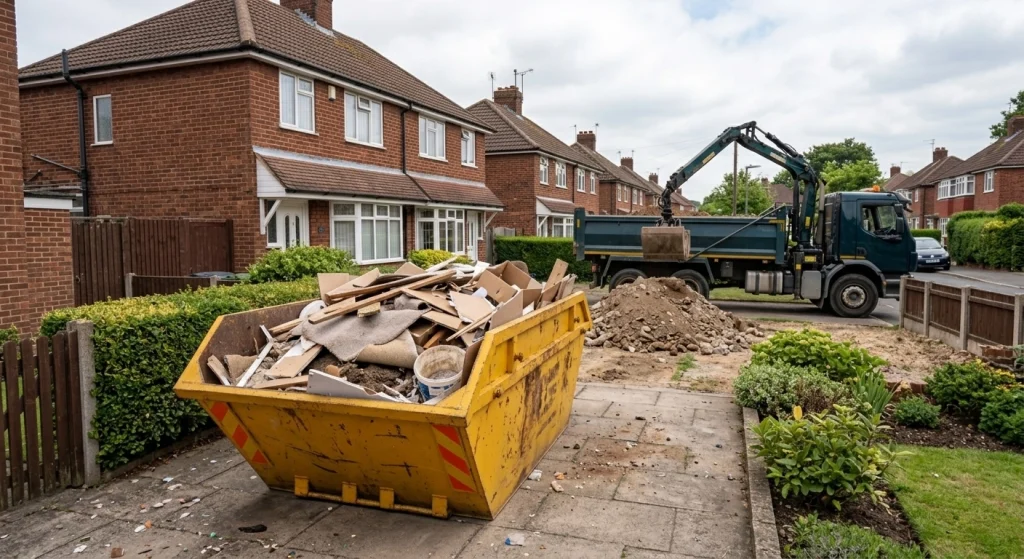
There is no fixed answer because the cost depends on the amount and type of waste you have. For smaller household projects and mixed waste, skip hire can often be a more practical option. You can fill the skip gradually instead of arranging a collection as soon as the waste is produced.
Grab hire can make more sense when you have a large volume of heavy material already piled up and ready to go. The lorry can load everything during one visit, which can be useful for larger building and groundworks projects.
Skip Hire for Home Clearances and Renovations
For many homeowners, skip hire fits naturally into the way a project is carried out. If you are clearing a garage, tidying the garden, or renovating part of your home, waste is often produced throughout the project rather than all at once.
Having a skip on site means you can put waste into it as you go. You do not need to keep piles of rubbish around the property or make repeated trips to the tip.
For smaller domestic projects, a 4 yard or 6 yard skip can often provide enough space. Larger renovation work may need a bigger option depending on the amount of waste being produced.
Grab Hire for Construction and Heavy Waste
Grab hire is particularly useful when dealing with large amounts of heavy material. Construction and groundworks can produce substantial quantities of soil, rubble and hardcore. Moving this waste by hand can take a lot of time, especially when there is a large pile to clear.
A grab lorry can collect the material directly and load it into the vehicle using its hydraulic arm. This can make it useful for larger building projects where a lot of heavy waste needs to leave the site quickly.
Which One Is Right for Your Project?
The easiest way to decide is to look at how your waste is being produced. If you have mixed household, garden or renovation waste and expect to produce it over several days, a skip can give you the flexibility you need.
If you already have a large pile of soil, rubble or other heavy material and want it removed in one visit, grab hire may be worth considering.
Access is another thing to think about. A skip needs a suitable place for the container, while a grab lorry needs enough room to position the vehicle and safely operate its hydraulic arm.
Do You Need a Permit?
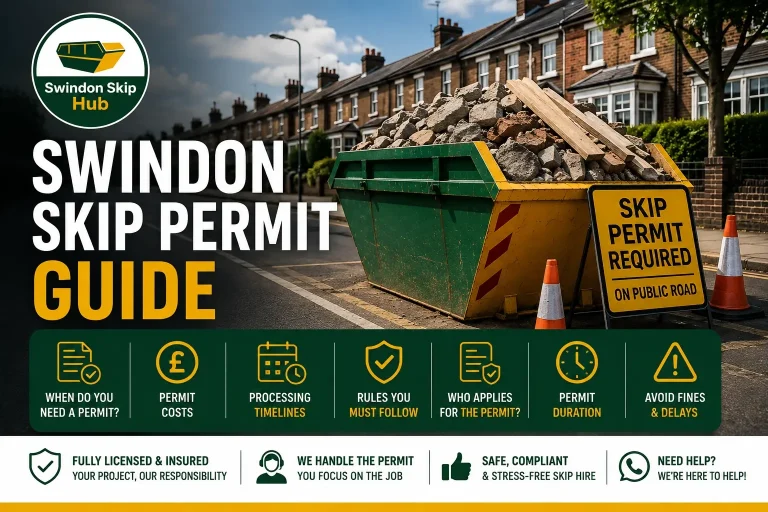
The rules are different for skips and grab lorries. If a skip is placed on a public road, a skip permit is required in Swindon. A skip placed entirely on private land, such as a suitable driveway, does not normally need a permit.
Grab hire works differently because the lorry does not stay at the property with a container. However, the vehicle still needs a suitable place to stop and operate safely.
Conclusion
Skip hire and grab hire both remove waste, but they suit different types of projects. A skip gives you somewhere to put waste while you work, making it a useful option for home clearances, DIY and renovations. Grab hire is more suited to large piles of heavy waste that are ready to be collected in one visit.
If you are working on a project in Swindon and think skip hire would suit the way your waste is being produced, contact Swindon Skip Hub for a free quote. We can help you choose a suitable skip size for the amount of waste you expect to have.