Most people only hire a skip once in a while. Because of that, the small details that actually matter are easy to miss. You only find out when something goes wrong, like a delay in collection or an unexpected extra charge.
This guide covers the things people are rarely told before booking. Once you understand these, skip hire becomes straightforward, and you can avoid the usual problems from the start.
Quick Answer
Here are a few things you probably don’t know about skip hire: Skip hire isn’t just for builders; most bookings are domestic. Delivery and collection are included, but loading is your responsibility. Hire periods are usually longer than expected.
Mixed and inert waste often need different skip types. Most waste is recycled rather than sent to landfill. Overfilling can get your skip refused. Road placement sometimes needs more than a standard permit.
1. Skip hire is not just for builders
Most people picture a skip on a building site. In reality, most bookings are for everyday jobs like house clearances, garden waste, or moving home. If you are clearing out a garage or doing a full declutter, a 4 Yard Skip is often the simplest option.
2. You are responsible for loading
Skip hire only includes delivery and collection. It doesn’t include loading the waste, so it’s worth planning, especially for heavy items like furniture or soil. Knowing how to fill a skip efficiently saves you time and effort once it arrives.
3. Hire periods are longer than most people think
A lot of people assume skips are hired for a day or two. In most cases, you get about 1 to 2 weeks. That gives you enough time to work at your own pace, but if your project might take longer, it is best to mention it early.
4. Mixed waste and inert waste aren’t the same thing
There is a big difference between mixed waste and inert waste. Mixed waste includes general household rubbish. Inert waste includes soil, bricks, and concrete.
These materials are handled differently, and sometimes even require a different type of skip. Always mention what you are disposing of when booking.
It’s also worth knowing that you remain responsible for everything in the skip, even if someone else adds to it without asking, so it’s worth keeping an eye on it during your hire period. Read out our article on what to do if someone else put rubbish in your skip.
5. Most waste is recycled
A lot of people assume everything goes straight to landfill. That is not how it works. Materials like wood, metal, rubble, and cardboard are sorted at licensed facilities, and a large portion is recycled. This makes skip hire a more responsible option.
6. The fill line is a strict rule
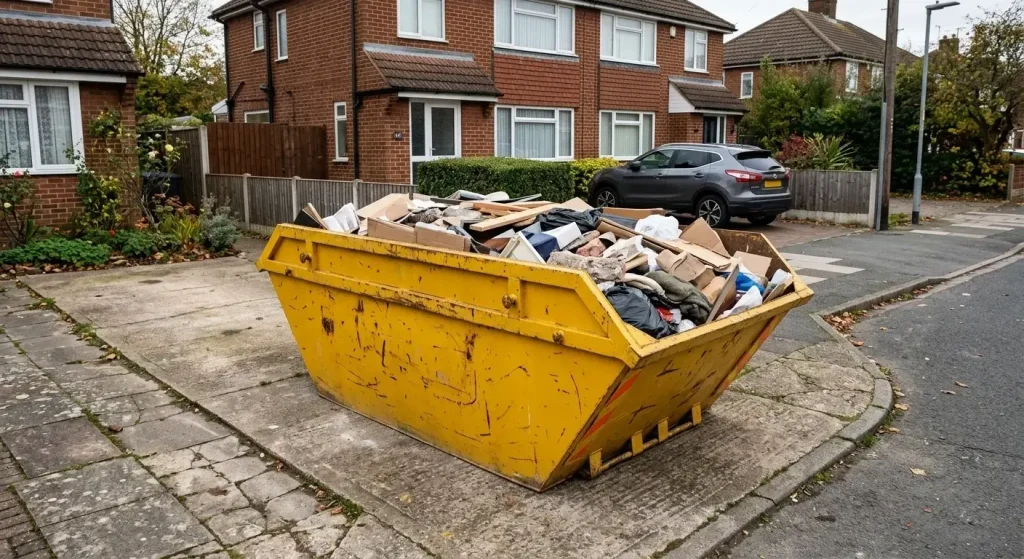
Every skip has a fill line. Waste must not go above it. If the skip is overfilled, it may not be collected at all. This is because it becomes unsafe to transport. Keeping everything level avoids delays and extra hassle.
7. Road placement isn’t always simple
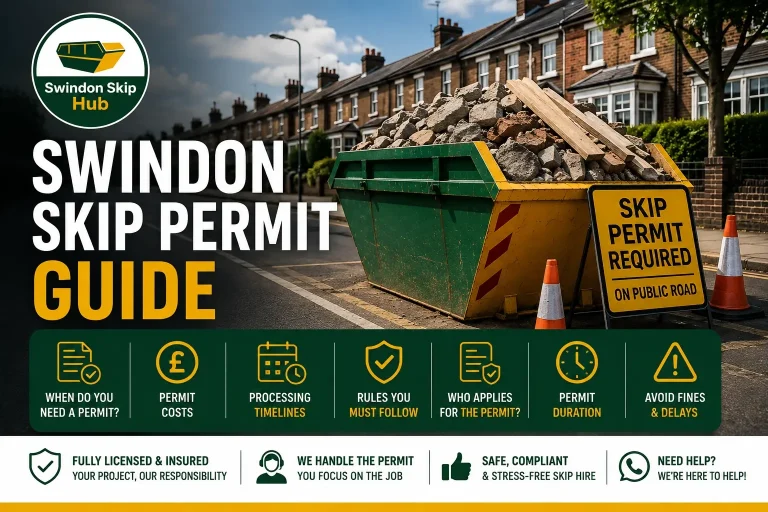
If your skip goes on a public road, you will usually need a permit. If your street has yellow lines or marked bays, placing a skip on the road may require an extra parking suspension in addition to the usual permit. This is something many people do not realise until the last minute, so it is always worth checking early.
8. Weight limits apply even if the skip looks empty
You might think a skip is fine as long as it is not full. That is not always the case. Heavy materials like soil or rubble can reach the weight limit before the skip is visually full. This can lead to additional charges if not planned properly.
9. Skip hire is more affordable than people think
A lot of people assume skip hire is only worth it for big building jobs, which puts them off using one for smaller clearances.
In reality, it is often more affordable than expected. Prices actually start from £199 for a small 2 Yard skip. Exact cost depends on size, hire length and a few other factors, making it worth checking before you assume it’s out of budget.
Conclusion
Skip hire seems simple on the surface, but the small details are what make the real difference. Once you understand the common mistakes and myths, the whole process becomes much smoother.
Most of the common issues people face come from a lack of clarity before booking. Taking a little time to understand these basics can save you unnecessary stress, delays, and extra costs.