When you are clearing out your home or garden, or doing renovation work, it is not always obvious what you can put in a skip. Some items are fine, while others need separate disposal. Putting the wrong waste in your skip could lead to extra charges or problems when it is collected.
To help you avoid these issues, here are 13 common items people ask about, including what can go in a standard skip and what you should check before you throw it away.
Quick Answer
Glass, soil, bricks, rubble, carpet, wood and garden waste can usually go in a standard skip. Mattresses, sofas, plasterboard and paint tins may need separate handling, so check with your skip hire company first.
Fridges, freezers, washing machines, TVs, asbestos, gas cylinders, batteries and tyres are not accepted in standard skips. If you are unsure about an item, ask before putting it in.
Items You Can Usually Put in a Skip
Check these common waste items before booking to avoid unexpected charges and disposal problems.
1. Glass
Most ordinary glass can go in a skip, including broken household glass. However, broken pieces can be sharp, so wrap them securely or place them in a sturdy box to reduce the risk of injury.
Fluorescent tubes and other specialist glass items should not be treated as ordinary glass. Check with your skip hire company before disposing of them.
2. Soil, Bricks and Rubble
Yes, soil, bricks and rubble can usually go in a skip, but they are much heavier than general household waste. They can reach the skip’s weight limit before the container looks full, so avoid overloading it.
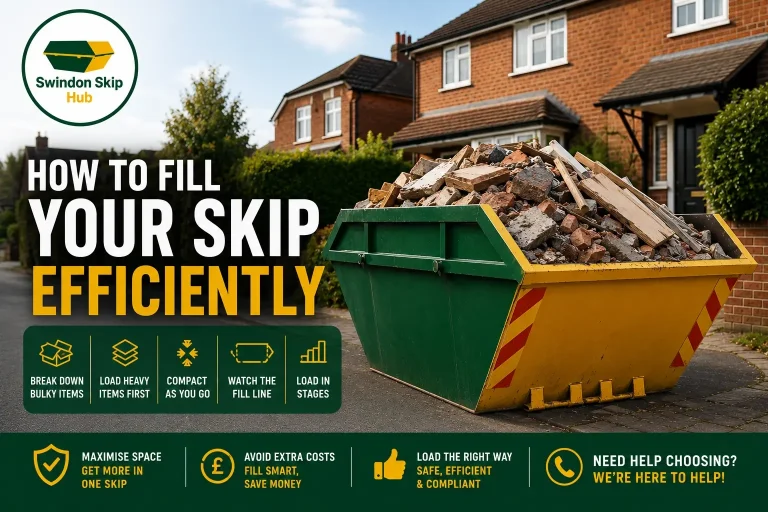
To fill your skip efficiently, spread heavy materials evenly and avoid piling them all in one area. If you have a large amount of soil or rubble, tell your skip hire company when booking so they can advise you on a suitable skip and any weight restrictions.
3. Carpet and Underlay
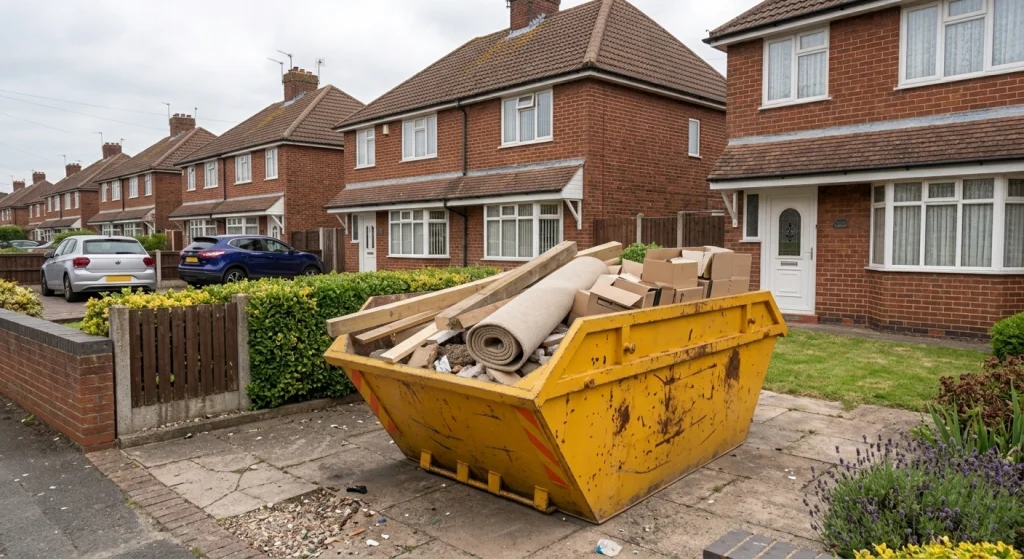
Old carpets and underlay can usually go in a standard skip. That makes carpet one of the easier items to get rid of when replacing flooring or clearing a room. To save space, roll the carpet tightly and tie it securely before putting it in the skip.
4. Wood and Timber
Most wood can go in a skip. This includes old doors, floorboards, fence panels and leftover timber from DIY projects.
The exception is wood treated with creosote or similar preservatives, including certain railway sleepers and telegraph poles, which need specialist disposal. If you are unsure what your timber has been treated with, check with your provider before loading it.
5. Garden Waste
Garden waste such as grass cuttings, leaves, hedge trimmings and small branches can usually go in a skip. If you are clearing an overgrown garden, removing an old shed or cutting back plants, a skip helps you collect the waste in one place.
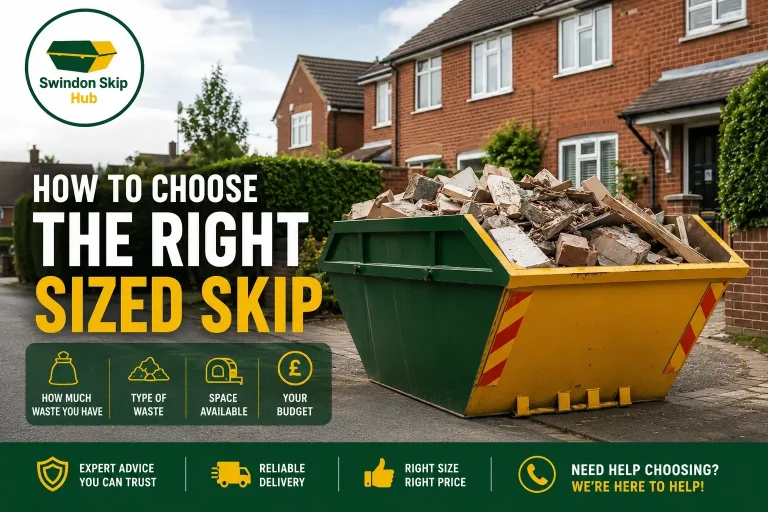
For a garden tidy up that also involves getting rid of old outdoor items or shed contents, a 4 yard skip may be worth considering, depending on the amount and type of waste. Large tree stumps, thick roots and soil can be heavy, so check with your skip hire company before loading them.
Ask First
These items are not always accepted in a standard skip. Some providers handle them separately or charge an additional fee, so check before loading them.
6. Mattresses
Mattresses may be accepted by some skip hire companies, but others handle them separately or charge extra.
If you are clearing a bedroom or getting rid of an old bed, mention the mattress when requesting your quote. This gives your provider a chance to confirm whether it can go in your skip and whether any additional cost applies.
7. Sofas and Armchairs
Sofas, armchairs, sofa beds and padded dining chairs may not be accepted in a standard skip. In England, upholstered seating that contains persistent organic pollutants (POPs) must be handled separately under Environment Agency rules and sent for appropriate disposal.
Many skip hire companies will not accept these items in a standard skip, so always check before booking. Do not dismantle upholstered furniture yourself to try to get around disposal restrictions.
8. Plasterboard
Plasterboard should not be mixed with ordinary skip waste unless your provider has confirmed that the arrangement is suitable.
When gypsum-based plasterboard breaks down in the wrong conditions, it can release hydrogen sulphide gas. Mixing it with other waste can also make proper recycling and disposal more difficult.
If you have plasterboard left over from a renovation, arrange its disposal with your skip hire company before loading it. It may need a separate skip or a dedicated collection. Keep it dry where possible.
9. Paint Tins
Paint needs a little care because the rules depend on what is left inside the tin. Liquid or partly used paint should not go in a standard skip. Completely empty, dry paint tins may be accepted by some providers, but you should check first rather than assume.
If you have leftover paint, contact your local council recycling centre to find out how it can be disposed of. Never pour paint down a drain or onto the ground.
Not Allowed in a Standard Skip
The following items cannot go in a standard skip because they may be hazardous or require specialist disposal.
10. Fridges, Freezers, Washing Machines and TVs
These items should not go in a standard skip because electrical appliances require separate waste handling.
Fridges and freezers contain refrigerant gases, and all of these items count as waste electrical and electronic equipment, which has to be handled separately.
If you are replacing an appliance, ask the retailer whether they can take the old one away when delivering the new one.
11. Asbestos
Asbestos must never go in a standard skip. It may be found in older buildings, including some garage roof sheets, soffits and textured coatings. Buildings constructed or refurbished before 2000 may contain asbestos, although the age of a building alone cannot confirm whether it is present.
If you suspect that a material contains asbestos, do not break it, drill into it or try to remove it yourself. Keep people away from the area and seek advice from a qualified asbestos professional, and check the Health and Safety Executive’s guidance before taking any further action.
12. Gas Cylinders
Gas cylinders need separate disposal arrangements and should not go in a standard skip.
Gas cylinders may still contain pressurised gas, even when they appear empty. Contact the supplier or an appropriate collection service to arrange their return.
13. Batteries and Tyres
Batteries can create a fire risk if damaged or crushed, so take them to a suitable battery collection point or recycling centre. Tyres should also be taken to an appropriate recycling or disposal facility.
If you have any of these items, tell your skip hire company before booking so you can arrange the right way to dispose of them.
Conclusion
Most waste from a household clear-out, garden job or renovation can go in a skip, but there are some important exceptions. Checking what is accepted before you start loading can save you from extra charges and problems when your skip is collected.
If you are planning a clear out or home improvement project in Swindon, contact Swindon Skip Hub for a free quote. Tell us what you need to get rid of, and we can help you choose a suitable skip and explain which items need a different disposal method.